In commemoration of Flannery O'Connor's 90th birthday, we are honored to share the introduction to The Complete Stories written by her longtime editor and friend, Robert Giroux. Flannery O’Connor’s first book has never, up to now, been...

In commemoration of Flannery O'Connor's 90th birthday, we are honored to share the introduction to The Complete Stories written by her longtime editor and friend, Robert Giroux. Flannery O’Connor’s first book has never, up to now, been...

Following the recent publication of The Sellout, which has been called “among the most important and difficult American novels written in the twenty-first century,” we asked Paul Beatty to sit down with his editor, Colin Dickerman, and discuss his explosive follow-up to

As she was writing her most recent biography, Mr. and Mrs. Disraeli, Daisy Hay spent hours in the basement of the Bodleian Library in Oxford trying to untangle the relationship between one of Great Britain’s foremost politicians, Benjamin Disraeli, and his eccentric wife,...
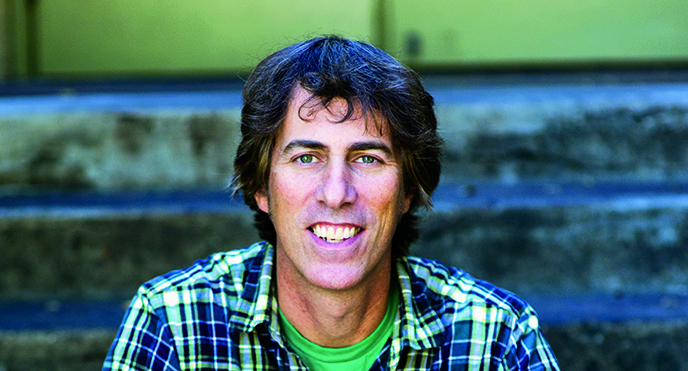
I’ve been anticipating some version of this question, hoping I’d have to answer it actually, since about 2008. My last book, Dogwalker, came out in 2001, and even though I still wasn’t close to completing another book in 2008, I liked to think...

After two acclaimed story collections, Laura van den Berg brings us her debut novel, Find Me—an "unforgettable . . . unique . . . glorious" (TimeOut New York) tale of a young woman struggling to find her place in a world that...

Last Tuesday, at my first signing for Doing the Devil’s Work, a woman in the audience asked, “How do you write a woman character? You’re a good writer, but you’re, you know, a man.”
On October 17, 2014, Marilynne Robinson and the staff of The Nation had a conversation about writing, Calvinism, and her work, including her new novel, Lila. What follows is an edited transcript of the conversation that appeared in the January 26,...
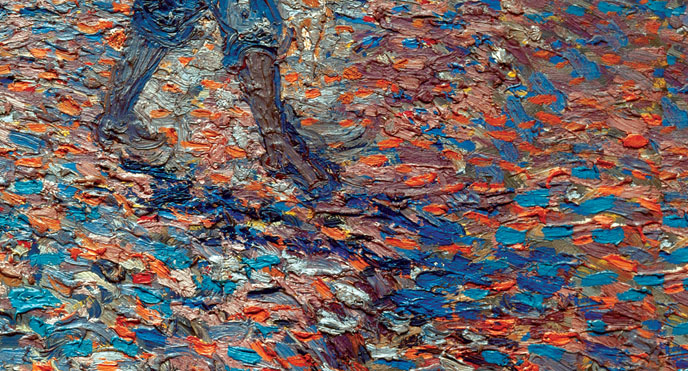
Vincent van Gogh loved to walk. It is one of the first things you learn about him, if you look into his biography or start to read his letters. In the very first letter he ever wrote to Theo, his younger brother, the theme...

No modern American writer has had so lively a posthumous life as Flannery O’Connor. When she she died, of lupus, in August 1964, age thirty-nine, she was the author of two novels—Wise Blood (1952) and
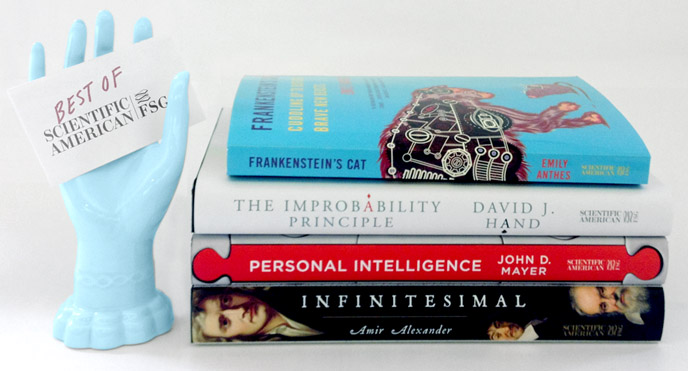
Last week, we asked FSG staff to share their favorite books of the year. This week, authors and editors from our Scientific American imprint expand the list with their favorite science books from 2014. Amir Alexander, author of Infinitesimal: How...
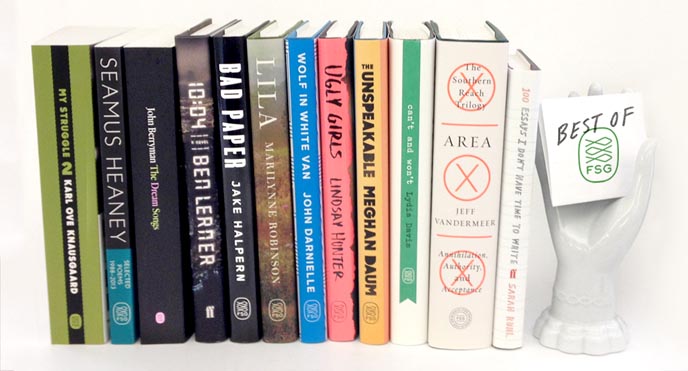
We asked the staff of Farrar, Straus and Giroux to pick the best books published in 2014, name their favorite titles—new, old, or forthcoming—that they read this year, and to share which FSG books they will be giving during the holidays. Responses from FSGers working in editorial, publicity, foreign rights, production, sales, marketing, contracts, and operations flooded in. Together, these are FSG’s Favorite Books of 2014.

Nearly fifteen years after her debut essay collection, My Misspent Youth, unforgettably captured the anxieties, aspirations, and hypocrisies of a generation, Meghan Daum returns to the personal essay with a masterful collection of previously unpublished work, The Unspeakable: And Other Subjects of Discussion. In these insightful and provocative new essays, Daum pushes back against false sentimentality and manufactured emotion in American life. Here, she talks about the new book, womanhood, and being mercilessly honest in her writing.
“I’m a failed poet,” William Faulkner confessed to Jean Stein in 1956, during a conversation subsequently published in the Paris Review. “Maybe every novelist wants to write poetry first, finds he can’t, and tries the short story, which is the most demanding form after...

FSG Originals released all three volumes Jeff VanderMeer's Southern Reach Trilogy in 2014—Annihilation in February, Authority in May, and Acceptance in September—in acclaimed paperback original editions. Now the imprint has unveiled plans for their first hardcover publication: a...

I say this with love in my heart: New York City is a woman who doesn't give a fuck about you. It's not personal; she doesn't give a fuck about anyone. Or, to be fair: she's the type who cares deeply, fiercely, but only after she's known someone a good long time, and usually after that someone has proven capable of both suffering and thriving without her help. New York City doesn't like needy people, and in 2003, when I first moved from Tel Aviv to Manhattan, I was very needy.

The thirty-three Chilean miners buried in the Copiapó mine disaster were rescued four years ago this month. When they were still underground, the miners agreed that should they survive, they would only tell their story together, once, to one person. Novelist and Pulitzer Prize–winning...

I couldn’t sleep. It was June 2009 and I was returning from a friend’s wedding, staying in a cheap hotel outside of Sacramento. My husband was beside me, blissfully unconscious, as I sat there, stupefied by late night television, by the weeping beauty pageant contestants, by the pawn shop reality programs, by the people fighting in foam-padded suits. Over the years, insomnia had provided few benefits—a raw, twitchy nervous system, for example, or a suspicion on some days that my brain had been replaced with boiled ham—but all that was about to change.

Last April, after publishing an op-ed in The New York Times about the bed & breakfast I founded and ran with my seven housemates from 2010-2014, we got a call from a Japanese television producer. Would we mind if she came over to film us for a segment on a Japanese TV show? As rare as cooperative living may be in the states, it’s even rarer in Japan, so the she wanted to film us in the act of our bizarro live-work situation—making breakfast for our guests, having business meetings, even just walking up and down the stairs or standing idly in a hallway—all of it was fascinating, absolutely fascinating. As the writer-in-residence with a new novel, she also wanted to get some action shots of me, sitting at my desk, writing . . . just casually, normally, with a television crew over my shoulder, and a big stack of my own books within reach. Immediately, I thought of Etgar Keret’s “What Animal Are You,” in which the writer of the story is being filmed for a segment on German Public Television, as he is writing a story about being filmed by a German Public Television crew. I found the text online, pasted it into a word document and began editing and embellishing, but a few days later the producer said they couldn’t use the over-the-shoulder shot because they could see I was writing about them. No, I explained, I was merely rewriting what Etgar Keret had written about a situation much like this one. It didn’t matter, she said, the shot was useless but they had plenty of other angles of me at my laptop, imitating myself. The segment ran months ago now and the B&B saw a little influx of Japanese guests, but our lives returned quickly to our bizarro-normal. All that was left, is the following adaptation. —Catherine Lacey The sentences I’m writing now are for the benefit of Japanese Public Television viewers. A producer who came to my home today asked me to write something on the computer because it always makes for great visuals: an author writing. It’s a cliché, she realizes that, but cliches are nothing but an unsexy version of the truth, and her role, as a producer, is to turn that truth into something sexy, to break the cliché with lighting and unusual angles. The light in my room falls almost perfectly, just a single spot to my right, so all that’s left is for me to write. This has happened before, for a photographer who wanted to take a picture of me writing. Or pretending to write, the photographer said, either will do.
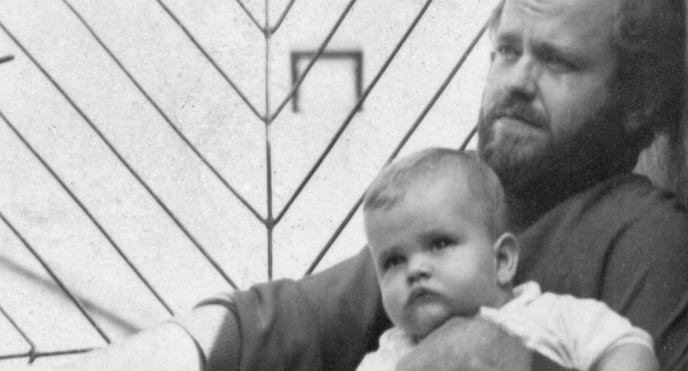
Every story, fictional or otherwise, entails a pact with the reader, and whether or not the reader honors that pact depends on the writer’s ability to sustain it for the duration of the reading. If I write a text in which an anonymous narrator confesses sordid and even depraved aspects of his life, adopting an elusive style with echoes that insinuate far more than they say, the reader will immediately be tempted to consider it a fictional text. So how can the reader be sure that I haven’t in fact put on a mask in order to talk about myself?
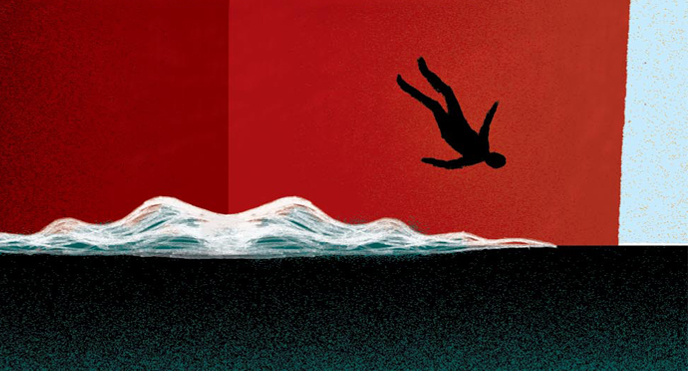
Throughout my childhood, a portrait of my mother’s grandfather, Armand de Potter, hung on our living room wall. My mother always referred to him simply as “Granddaddy,” though she had never met him. He had died suddenly in the early years of the twentieth century, disappearing from the deck of a passenger ship. What caused him to go overboard, no one could say. There were no witnesses. He had left his steamer trunk in his cabin, but his wallet was never found.